How to break a small community’s cycle of poverty

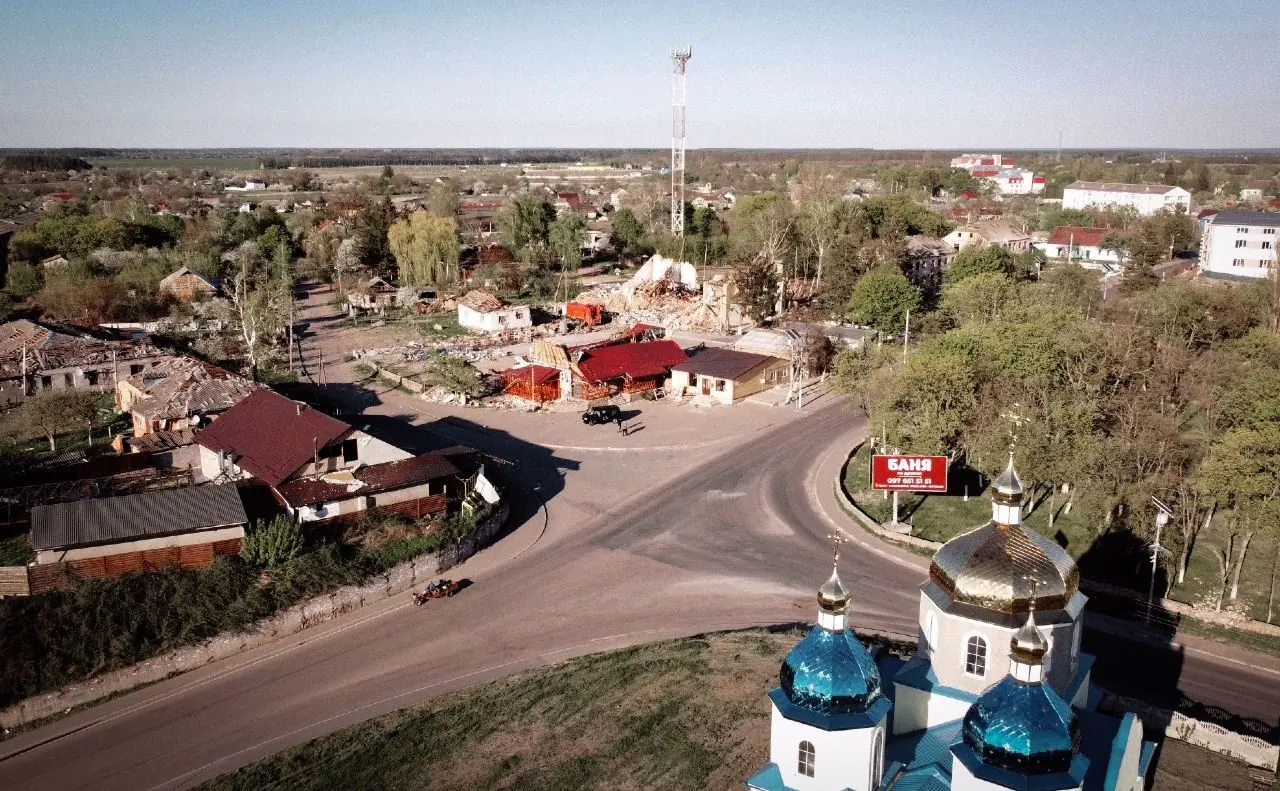
Small communities decline not because they lack money. They suffocate from depopulation — when people die and leave, when the chance to work, raise children and build a life on the spot disappears.
What drains them is a closed cycle in which weak services, a shortage of work, low budget revenues and further decline in quality of life reinforce one another. No single renovation, grant or investor breaks that cycle. It takes a different logic of local development: stitching demand, people, assets and administrative decisions together at once — at the points where a community can already act today. Connect the villages, secure basic services, give local business access to workers and customers, put empty buildings, land and other community resources to use. When those decisions are synchronised, the community wins back its most valuable resource — people.
A small community degrades for more than a lack of money
A small community rarely collapses suddenly or for a single reason. Usually it happens gradually: the local café closes, the route to the neighbouring village is cancelled, the school shuts because there are too few pupils. The librarian dies, there is no one to replace her, and a padlock appears on the library door. Each loss looks local, but together they narrow the possibilities for life in the community. A single repair, grant or investment can ease one problem, but it cannot change a situation where these losses accumulate simultaneously.
A study of the Byshiv community in Kyiv oblast, conducted in April–June 2024 among 374 respondents and in four focus groups, captures this contradiction. 85% of respondents are satisfied with life in the community, and 77% are ready to stay where they live.
But willingness to stay does not mean the community can retain its population or attract new residents. Although the population of the Kyiv agglomeration grew by 5% during the war, between 2023 and 2025 the population of the Byshiv community fell, and the number of children under six halved. That is why the community must not only keep those already living there, but become a place new people choose.
For those who already live there, the community means family, housing, familiar routines and ties that are hard to leave. For those still choosing where to live, other things matter: whether there is work, how to reach a school or a doctor, where to be employed, whether there are enough services for children.
Not a set of problems, but a closed cycle of poverty
The problems of a small community do not exist separately. They form a cycle.
Each link pulls the next. Fewer people mean a narrower labour market and weaker consumer demand. Business does not enter or expand, because workers and customers are missing. Less business means lower personal income tax and single tax receipts. Lower budget revenues mean weaker services, worse infrastructure and even fewer reasons to choose the community for life. The cycle closes.
The Byshiv study shows this link: mobility, employment and children’s access to schools and kindergartens all affect one another. Changes in one or two links can therefore shift the whole situation.
Renovating a community centre without jobs nearby will not stop outmigration. Jobs without transport will not give people access to employment. Transport with no reason to travel will not create demand.
Start where a small decision can trigger change in several areas at once.
Three drivers of local prosperity
Setting aside the list of local problems, a community has only three sources of prosperity: business, new residents and tourists.
| Unit | To the budget | To the local economy | Multiplier |
|---|---|---|---|
| Job | $675/yr | $1,300/yr | ×2 |
| Sole proprietor | $885/yr | $3,700/yr | ×4 |
| Resident | $145/yr | $1,250/yr | ×9 |
| Overnight stay | $3 | $60 | ×20 |
| Day visit | $0.6 | $16 | ×26 |
Source: prosperity modelling, URenew 2026.
The multiplier is the total income that appears in the local economy when people spend money on goods, transport, food, retail and other services. Money earned by one entrepreneur or worker partly stays in the community: it goes to wages, purchases, local services and taxes. That is how the engine of prosperity starts.
For a community, a new resident matters more economically than a tourist. A tourist leaves money quickly, but little of it. A new resident shapes demand for services for years, pays taxes, works or runs a business, and their children use the school, the kindergarten and after-school clubs.
Tourism can provide a fast start, so it is worth developing. But housing policy has to run in parallel: affordable housing, prepared land, clear building rules, basic services and transport links. Postponing it means neglecting the main source of long-term demand and tax revenue.
Public space, revitalisation, energy, waste sorting and community areas are needed too. They do not generate income themselves, but they create the conditions in which business, tourism and new residents can work.
Driver one: business — attract it or grow it
Business can appear in a community in only two ways: it is either attracted from outside or grown locally.
Attracting external business
This mainly concerns larger companies that must be persuaded to invest. Saying “it’s nice here” is not enough. An investor needs a structured investment offer.
- A prepared land package: designated use, legal status, utility connections, price, approval and launch timelines.
- Data for a business decision: available workforce and its qualifications, logistics to the highway, Kyiv, the railway, warehouses and markets.
- Tax and administrative incentives the community is entitled to offer, plus a project manager who guides the investor from the first conversation to commissioning.
- Preparing a concept and launching an industrial park procedure — if the community has a suitable industrial site and sees demand from manufacturing, processing or logistics.
Attracting investment requires systematic work rather than a one-off presentation — investor search and road shows. That means a prepared materials package and consistent communication with industry associations, regional investors, banks, donors and twin communities. Such a campaign can run 6–12 months, and its conversion is often measured in single-digit percentages.
The limits should be acknowledged honestly: competition between communities for an external investor is high, and a small community’s negotiating position is usually weaker. Building an entire strategy on waiting for a large investor is a mistake.
Growing business inside the community
This path is often underrated, although it is cheaper, more manageable and more reliable. A community usually already has the necessary elements — they are simply not connected.
- Unmet demand for services: no clubs, no elderly care, no kindergarten, no workshop, no café on the tourist route.
- Unused assets: municipal premises, closed schools and kindergartens, unheated cultural centres, former camps, libraries, land plots, ponds.
- Human resources: active residents, veterans, youth, IDPs with professional experience. In Byshiv 38% of respondents hold an active civic position, 20% already take part in community initiatives, and another 44% are ready to join.
- Demand for farmer cooperation: building shared storage, processing and logistics capacity.
One more element is missing — an institution or a person able to connect the need, the asset and the entrepreneurial initiative. That is the real function of a business incubator. It is not necessarily a building with a co-working space. It is a facilitation mechanism that brings demand, property, an entrepreneur and support instruments into one process.
What business incubation looks like in practice
Village A has no after-school clubs but an idle library. Village B has lost its kindergarten. An IDP — a primary school teacher — has moved to village C. Together this can become a small education project: premises, a specialist and demand from parents. What it needs is renovation, equipment and clear terms for using the premises. The community can also purchase part of the service for children from privileged categories.
In another village stands a former pioneer camp, and the community has an entrepreneur ready to open a care home for the elderly. Such a project creates jobs but requires a long-term lease: without one, investing in renovation makes no sense.
Next to the tourist route the community owns a plot, and a local family is ready to set up a food stop. The community does not open the café itself: it prepares the plot, sets clear lease terms, provides utility access and includes the location in the route.
In villages D and E several farmers have nowhere to store the harvest. They sell it right after collection or haul it to distant warehouses. A shared warehouse, cold store, dryer or packing line can operate through a cooperative. The land and the farms stay in the farmers’ ownership.
Revitalisation: new life for assets and a source of income
Every community is full of neglected sites. Many are heritage buildings that lost their face during the Soviet era and the early years of independence: an old hospital, a mill, a manor-era workshop. All of it can be revitalised, filled with meaning and service, and monetised.


There are many small communities that generate decent tourist traffic despite the absence of decent roads. But tourists mostly leave such communities litter, and only occasionally money. The community’s task is to work out how to moderate that traffic: intercept it, channel it to the right points, monetise it.
This is clearly impossible without private initiative and tourism infrastructure. And here the local authority must become a mediator: bring heritage sites and enterprising residents together, think through the logic of routes, identify sites that can be handed over to local tourism operators, and agree on the tourist levy.
War and logistics
The war is redrawing Ukraine’s logistics map. A significant share of large warehouses and established routes has been lost, overloaded or needs duplication. Demand is growing for smaller regional hubs for storage, consolidation, sorting and distribution — closer to producers and with lower risk.
A community can prepare a plot or a building near a highway, a railway or a route to a large city. Such sites can serve several local producers, carriers and traders rather than a single large investor.
What the community has to do
The main barrier to projects is often not financing but law. Repurposing municipal property, registering property rights, changing designated land use, encumbrances and the availability of long-term leases — this is where projects stall most often. So the first requirements are:
- A map of needs. Which services are missing, exactly where, and what demand exists for them.
- A map of assets. Which property and land the community owns, in what condition, with what legal status, and how it can be used.
- An inventory of assets and rights. The community’s first real investment step. After that it can offer an entrepreneur, a cooperative or an investor a prepared site: with defined rights, road and utility access, and a clear term of use.
- A support package. Preferential lease, local tax incentives within the community’s powers, micro-grants, training, promotion, or guaranteed procurement volumes for community needs.
Dialogue with owners of neglected plots
Many communities have little municipal land. Some suitable plots and premises were privatised long ago but are not used: owners have left, lack resources for a project, or are waiting for prices to rise. Such sites should not be struck from the community’s plans.
The community can offer owners inclusion in its list of business sites and discuss terms of participation: a long-term lease, a joint investor search, document preparation and infrastructure connection. The owner keeps the land, and the community gets a chance to return it to the economy.
For agricultural use, lease or emphyteusis are possible; for development, lease or superficies.
Driver two: new residents
Historically a small community could hardly compete with the city for population. That has changed. Two large-scale factors now work in favour of small communities: housing destroyed by the war, and a shift in life priorities for part of the population.
Destroyed housing and the IDP potential
As of February 2026, KSE Institute estimated the number of damaged or destroyed residential buildings at roughly 416,000 — including 352,000 private houses and 63,000 apartment buildings. Direct damage to the housing stock stands at $65.9 billion, while reconstruction needs for the housing sector are estimated at around $90 billion. In total the country has lost about 14% of its housing stock.
Around 4.6 million internally displaced persons are registered in Ukraine. According to IOM estimates as of December 2025, roughly 3.7 million IDPs and 4.4 million returnees were actually living in the country.
Several indicators matter for communities:
- 71% of IDPs plan to stay in their current location beyond the next three months.
- 39% plan long-term integration.
- Housing, alongside employment, remains one of the two key barriers to integration.
- 35% of IDPs name housing as an unmet need.
- Over the winter of 2025–2026, 19% of IDPs moved into lower-quality housing.
- People facing substantial barriers to housing are far less likely to plan long-term integration in a new community.
This means housing directly determines whether a person becomes a permanent resident or keeps moving.
An illustrative estimate shows the scale of the opportunity. If just 10% of the roughly 1.4 million IDPs oriented towards integration consider moving to a small community with decent infrastructure, that is about 140,000 people, or 50,000–60,000 households — roughly 3–3.5 million square metres of housing.
This is an illustrative calculation. Even so, for hundreds of communities such demand means tens of thousands of square metres each — an entirely realistic scale for two or three construction phases.
De-urbanisation as a new reality
Systematic strikes on large cities have shifted part of the population’s priorities. A segment is forming for whom a quiet community near a city is not a compromise but a preferred choice — provided there is stable internet, a school, a kindergarten, sewerage, transport and basic services.
Before 2022 this segment barely existed at its present scale. Today it does, but it cannot be attracted by declarations. People move where they can live properly, work, educate their children and access medical and everyday services.
Development: an opportunity with a high entry threshold
In January 2026 the Verkhovna Rada passed the Law “On the Fundamental Principles of Housing Policy” No. 12377. It repealed the 1983 Housing Code, separated social, affordable and service housing, provided for communities to form a social housing stock, introduced operators of social and affordable housing, and opened the way to combining public and private resources.
This is a fundamental regulatory change. Full practice for small communities, however, has not yet taken shape. The pilot municipal rental housing project, currently at the stage of assessing financial models, covers only five communities: Lviv, Zhytomyr, Mykolaiv, Kremenchuk and Kropyvnytskyi.
In addition, few regional developers are ready to work with such projects. Margins are lower, risks higher, and the local market thinner.
In Byshiv, 76% of residents are satisfied with their own housing, 86% are not considering improving it, and only 2% link improvement to a mortgage. A housing project in a small community therefore cannot rely on local demand. It must target newcomers: IDPs, workers, young families, people working remotely and those seeking a safer environment.
A workable model for a housing project
If the community has an interested landowner and a developer, the basic structure of the project is already possible.
| Participant | What they contribute | What they get |
|---|---|---|
| Landowner | A land plot as a contribution to the project, not necessarily as a sale | A share in the project or a deferred payment |
| Community | Change of designated use, detailed plan, utilities, road, places at school and kindergarten, demand guarantee through IDP programmes, local tax relief | New taxpayers, higher demand for services, a livelier local economy |
| Developer | Design, construction, cost management | Margin at lower demand risk |
| Social or affordable housing operator | Stock management and lease administration | Operating income |
| Donors, banks, state programmes | Concessional finance and infrastructure grants | Delivery of the recovery and housing integration mandate |
The community’s main contribution to such projects is administrative decisions: land, planning documentation, permits, utilities, access to social infrastructure and a demand guarantee. These are precisely the factors that can substantially reduce risk for the developer, the operator and the donor.
There is a minimum condition for success: before the first phase of housing is commissioned, the community must already have a school with proper transport, a kindergarten, internet and transport links. Housing without services does not sell.
Driver three: tourists
The most common mistake is for a community to try to become a tourist attraction itself. Its effective role is to create a platform on which dozens of local entrepreneurs can earn.
At URenew we are currently working through a model built on exactly this principle. The community contributes to a 25-year public-private partnership:
- A designed and branded route.
- Plots for glamping.
- Car and bicycle parking.
- Rest areas.
- Tourist and cultural sites.
The operating project company takes on:
- Design and development of the route.
- Parking, toilets, lighting and wayfinding.
- Photo spots, cleaning, repairs, security and video analytics.
- Rental points, glamping, tent formats, solar panels.
- The tourism portal, merchandise, audio guide, guides and promotion in line with the brand book.
Small local businesses plug into the route through specific points: catering, breakfasts, hostels, retail, farms, workshops, attractions and local products. Every business that meets the brand book receives tourist traffic and pays to connect to the system.
For the community this means lease payments, the tourist levy, personal income tax from those employed along the route and, importantly, a stable sales channel for the micro-businesses created through the local accelerator. Tourism in this model is not an end in itself. It is distribution infrastructure for the local economy.
The Byshiv survey offers one more important benchmark.
So the starting point should be natural locations, an eco format, the route, basic infrastructure and easy access. Heritage and museum formats are best developed in a second wave, once traffic exists. This contradicts the typical instinct to start with a museum, but it matches real demand.
Where to start: priorities by cost of entry
Sequencing should be determined not only by importance, but by cost, speed of launch and dependence on factors the community does not control. Start with what needs no large funds, complex approvals or legislative change.
Wave 0 · 0–6 months, no major investment
- A platform of trust. In Byshiv, 58% of respondents placed “problems in local government” among the biggest issues: opaque use of funds, lack of information, public passivity and a shortage of expertise. Focus groups recorded that the authorities, business and active citizens all have ideas, but there is no permanent platform for interaction and no credible mediator. The format is a business incubator for micro-businesses at the intersection of “need + asset + person”: clubs, elderly care, a private kindergarten, a workshop, a food stop, everyday and social services.
- A map of needs. Establish which services are missing in each settlement and what real solvent or guaranteed demand exists.
- Support instruments. Preferential lease, micro-grants, volume guarantees, training and promotion.
- An inventory of assets and rights. A full register of municipal property and land: condition, designated use, encumbrances, utilities, legal status and repurposing options.
- Internal mobility. One of the cheapest actions with the greatest systemic effect: transport simultaneously opens access to work, school, healthcare and leisure. Byshiv has a connection to Kyiv, but links to the district centre and between villages are weak. 35% of residents are dissatisfied with the routes, and average travel spending is about $50 a month. That is already a ready business case for a carrier.
- “Green watch.” Waste sorting builds on existing behaviour: 76% are ready to pay for waste collection, 60% already hand in recyclables for money, and 50% name sorting as a way to contribute personally to the community. It is a fast, inexpensive and visible win that also reduces distrust of local government.
Wave 1 · 6–18 months, small investment
At this stage the community can launch its first economic and social products.
- A retraining programme for specific vacancies and the needs of local business. This is critical: 70% of respondents are dissatisfied with the absence of adult courses — the worst indicator in the study.
- Developing leisure areas and spaces for after-school socialising. 60% of residents point to a shortage of equipped leisure areas, and 50% to the need for a space where children and teenagers can meet outside school.
- Preparing and launching the tourism platform: routes, plots for glamping, parking, toilets, safe rest points and photo spots. A tender for the tourism operator, transfer of plots, landscaping.
- Preparing and running a road show to attract external investors.
Wave 2 · 18–36 months, major investment
Only after trust, basic services, first jobs and a clear information base are in place is it worth moving to large projects.
- School modernisation.
- A housing project under the “landowner + developer + operator + demand guarantee” model.
- Green generation, processing and large-scale manufacturing projects.
The logic of this sequence is straightforward: wave 0 creates trust and a solid information base; wave 1 creates the first jobs, services and local traffic; wave 2 becomes possible only once the community has a real investment case.
What the community must understand
A community may have assets and motivated people, yet lack the mechanism that turns them into working solutions.
There are three strategic drivers of local prosperity: business, new residents and tourists. Public space, energy, education, transport, revitalisation and waste sorting are not alternative drivers but the conditions that let those three work.
Growing local business is usually cheaper and more reliable than waiting for a large investor. The community’s task is not necessarily to build a co-working space, but to connect entrepreneurial initiative, unmet demand, available assets and support instruments.
The window for attracting new residents has opened for the first time in decades. Destroyed housing, the IDPs’ need for long-term integration and de-urbanisation create an opportunity that will not last.
A strong community does not pay with budget money alone. Its real currency is land decisions, planning documentation, utility access, transparent rules, fast administrative procedures and a demand guarantee.
Start not with the biggest project, but with the thinnest link in the cycle: trust, an inventory of assets, a map of needs, transport routes and simple visible changes such as waste sorting. This is not a preparatory stage. This is where breaking the chain of poverty begins.
How URenew helps
For communities: write to us at info@urenew.com.ua